|
About Dawn Marano & Associates
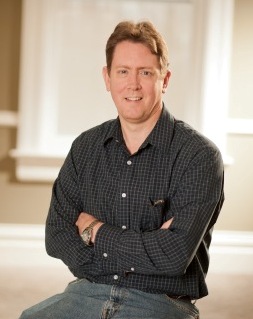
Dawn Marano has been described by authors with whom she has worked as a "writer's editor." Since she writes and publishes as well as edits, she brings to authors and their manuscripts an insight born of years spent sitting at a keyboard, wrestling with thoughts and with drafts and their revision.
Before starting Dawn Marano & Associates, she served for several years as an editor at the University of Utah Press, where her authors and their books received well-deserved national attention, including reviews in Publisher's Weekly, Library Journal, The Women's Review of Books, the Los Angeles Times, and The New York Times, as well as paperback subrights sales to such publishers as Penguin Putnam and Anchor Books. She earned her M.F.A. in creative writing at the University of Utah.
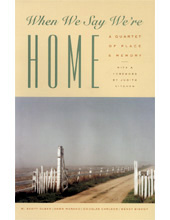
Dawn is a co-author (with W. Scott Olsen, Wendy Bishop, and Douglas Carlson) of When We Say We're Home: A Quartet of Place and Memory, a work of literary nonfiction, and of a recently completed memoir, Trusting the Edge which won first place in the nonfiction book category of the 2005 Utah Arts Council Original Writing Competition. Her poetry and nonfiction have appeared in several publications including Ascent and Terra Nova, and in the anthologies The Sacred Place: Witnessing the Holy in the Physical World (University of Utah 1996), and In Brief: Short Takes on the Personal from W. W. Norton & Company. Her work has been also cited among Notable Essays in The Best American Essays.
Dawn frequently makes appearances and teaches at regional writing conferences and through Lifelong Learning at the University of Utah. She regularly attends other national gatherings, as well, such as The Associated Writing Programs annual conference. Her extensive network of professional associations includes other editors, publishers, literary agents, and nationally recognized authors.
|
|
"I've come to understand my dreams as a borderland, not only between consciousness and sleep, but between what I know and what I don't yet know that I know."
--Dawn Marano, "Motel Mind," When We Say We're Home
|
|
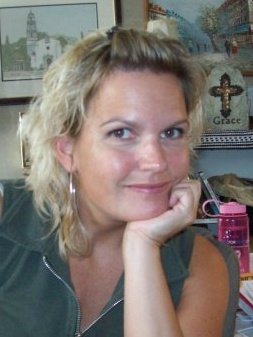
Maureen Clark’s poetry has appeared in Bellingham Review, Colorado Review, Alaska Quarterly, Puerto del Sol, Prairie Schooner, The Southeast Review and Gettysburg Review, among other literary journals. She has written two poetry collections; Premature Autopsy and A Year in Bountiful, and has recently completed a memoir titled Between the Gods.
Maureen currently teaches academic writing through the University of Utah Writing Program and Creative Writing with the university’s Lifelong Learning Program. She began her work as an editor with Ellipsis: Literature & Art at Westminster College. She also worked for a time as a reader for Quarterly West.
Maureen completed a residency at Vermont Studio Center in May 2007 and her manuscript, Premature Autopsy, was one of the semi-finalists for the Cleveland State University Poetry Center Prize in 2007.
Maureen was the president of Writers at Work from 1999-2000 and now serves on the advisory board of that organization.
|
 |
|
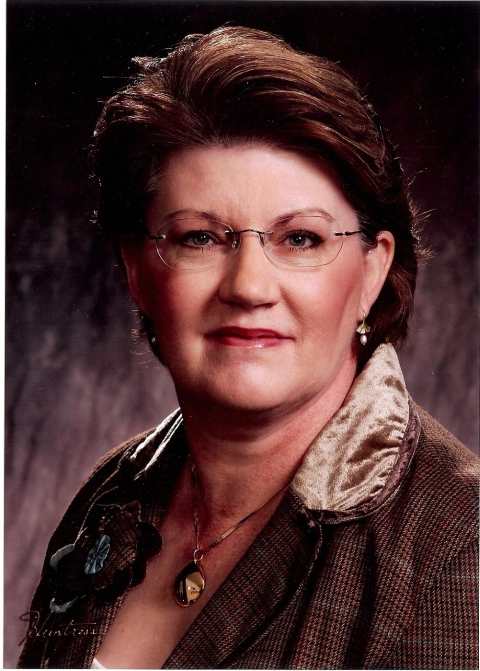
Diane Fouts’ strong connection to the natural world gives her an eye for descriptive detail. Her firm grasp of the music and techniques of language gives her an ear for phrasings that convey meaning, tone, and voice with precision. Her passion for the best writing gives her the heart to tune a manuscript until it sings.
Diane has gathered a wide range of experience that includes marketing, environmental, scientific, and literary publications. Her journeyman career has spanned decades—editing scientific papers and symposia proceedings, ghostwriting a correspondence course in business English for Japanese students, writing product copy for a major Internet shopping site, copyediting a monthly progressive/alternative magazine. In her latest real-world adventure, she writes, edits, and designs layouts for the print communications team at Huntsman Cancer Institute.
Currently a Master of Arts candidate in the University of Utah’s Environmental Humanities Program, Diane plans to graduate in 2011. The interdisciplinary program has allowed her to study with writers Terry Tempest Williams and Melanie Rae Thon, as well as photographer-activist Subhankar Bannerjee.
Diane’s poetry and prose have appeared in Silver Vain, High Country News, Catalyst Magazine, Glyphs Vol. I and II, and City Art Journal 2001. She co-edited the City Art 2002 book publication The Letters of Silver Dollar by Utah poet Jan Minich and the 2007 City Art Journal. She has performed in the Big Mouth Cafe reading series at the Utah Arts Festival every year since 2002.
|
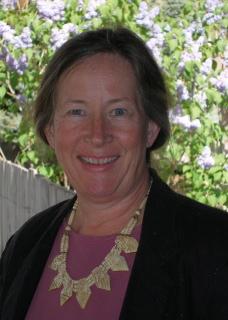 |
| Lisa Linsalata studied music in Ann Arbor, Michigan and at Webster University in Missouri. Her twenty-five years playing early music has given her a finely tuned ear for the sound and rhythm of language. She is, she says, a poet who "worships at the table of the ordinary." As an invited reader, some of her favorite presentations of her work have been for City Art, a literary reading series, and for a benefit for the Utah Coalition Against Sexual Assault. In 2002 Lisa was chosen for a one-month residency at Norcroft, a Minnesota writing retreat for women. Two of her poems have been selected by a documentary filmmaker as the basis of two short films. Lisa has recently finished writing her first collection of poems, In Praise of the Ordinary. Her work has been published in City Art Journal and is forthcoming in Prairie Schooner.
Although Lisa's own writing and personal interest is poetry, she is adept in a variety of literary genres. She has edited creative nonfiction and essay collections, as well as poetry manuscripts. While her specialty lies within the creative genres, she has edited scientific literature and corporate reports. She critiques work thoroughly and closely, and offers ideas and feedback to help further the creative process.
|
 |
|
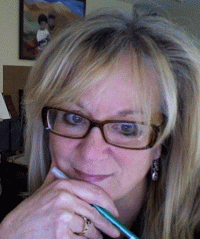
Jennifer Tonge edited a technical journal before becoming the poetry editor for Quarterly West. Since then, she has edited a range of technical, academic, and creative writing. Her emphasis on clarity and concision have helped business clients to win lucrative contracts and writers to refine their ideas, excavate their narratives from the clutter of early drafts, and develop their styles—she attends closely to the language of the works she reads, as well as to larger issues including structure and trajectory.
In considering prose, Jennifer pays particular attention to the temporal structure of narratives, choice of detail, and voice. She is interested in the ways in which fiction and creative nonfiction can profit from borrowing each others’ tools and often focuses on these possibilities in her suggestions for revision.
When considering poetry, Jennifer places equal emphasis on form and content, examining each both in and of itself and in relation to the other. Likewise, she considers both the individual poems within a manuscript and the manuscript as a whole. Imagery, articulation, and cadence are given particular consideration.
|
 |
|